A plumbing company's most profitable hour is the one nobody wants to work, and its least profitable dollar is the permit fee it forgot to pass through. Plumbing is a high-rate trade with a specific set of money problems: pricing emergency work so it is worth the 6 am call, carrying $15,000 of inventory in two vans, buying a $1,400 water heater a week before the customer pays, and waiting 30 days on property managers. This article is about the numbers behind a two-van shop, Riverbend Plumbing in Columbus, Ohio, set up in Daily Invoice Maker, a desktop invoicing app from the publisher of this site; the documents shown are its real output.
Key takeaways
- An emergency rate of 1.5 times the standard rate plus a call fee is not opportunism; it is the price of keeping a plumber on call, and it should be printed before the customer needs it.
- Permits are pass-through: on the invoice at cost, in your expenses at cost. Marking them up invites the question; forgetting them costs $140 a job.
- Water heater and fixture estimates should expire in 14 days; supplier prices move monthly and a 60-day-old quote is a loss.
- Van inventory is cash on wheels: $15,000 of fittings is $15,000 you do not have, so count it twice a year and stop restocking what does not move.
- Property management work is steady and slow; price it for net 30 and invoice monthly by unit.
Pricing the emergency
The example bakery call: Saturday, 6:40 am, grease line backed up. The invoice is a $245 emergency call fee, two hours of jetting at $165, and $48 of enzyme treatment, $623 in total. The same job on a Tuesday afternoon would be a $95 call fee and two hours at $135, $413. The $210 difference is what it costs to have someone answer the phone at 6 am on a Saturday: an on-call plumber is paid a standby rate whether or not the phone rings, and the shop needs perhaps six emergency calls a month to cover a $900 standby cost plus the premium the plumber earns for the call. Below 1.5 times the rate, emergency work loses money. The reason the bakery paid without a word is that the rate card was printed in the terms of every invoice it had ever received.
The water heater job: where the money goes
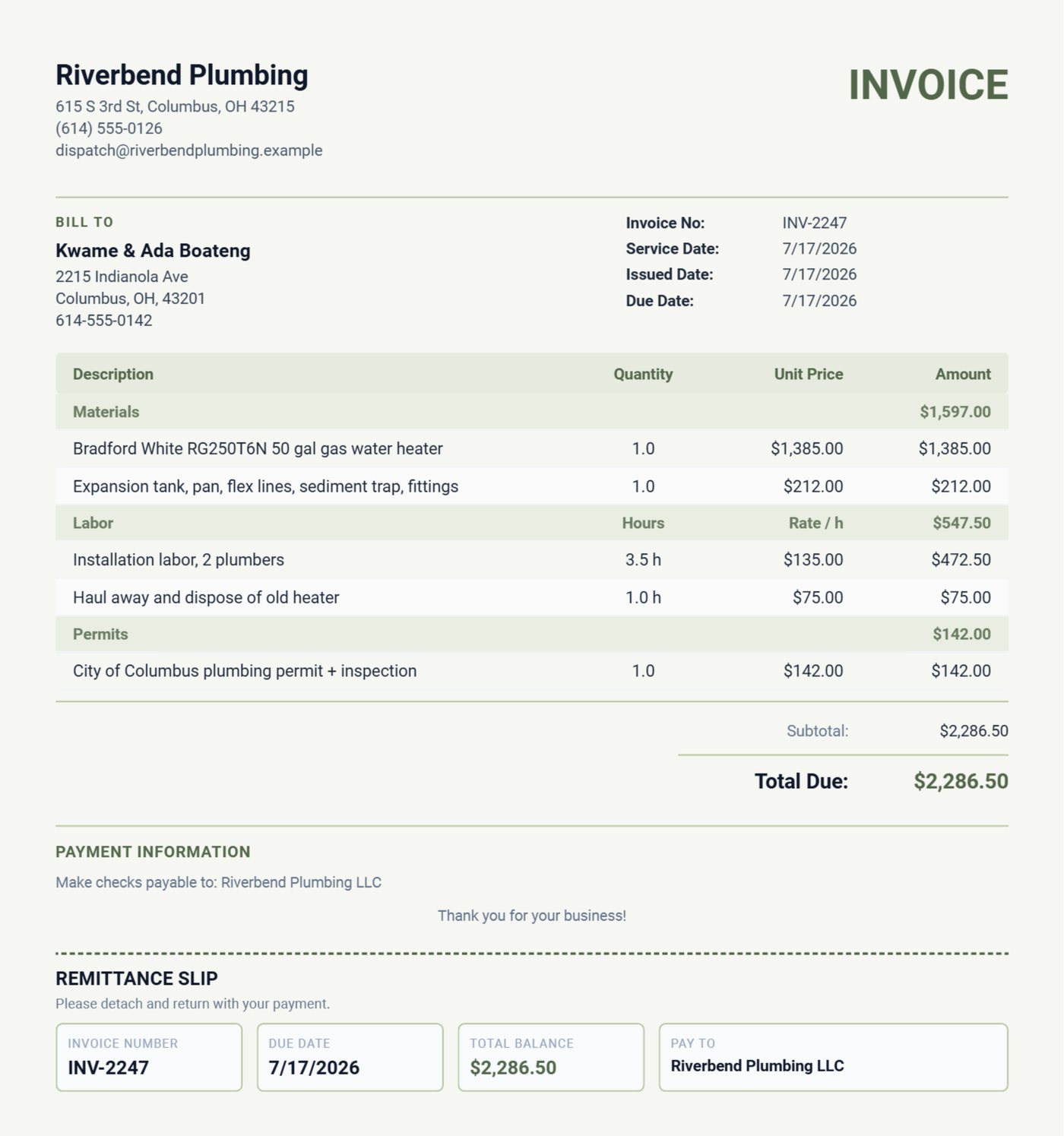
| Line | Billed | Cost | Gross margin |
|---|---|---|---|
| Bradford White 50 gal gas heater | $1,385 | $1,080 | $305 (22%) |
| Expansion tank, pan, flex lines, sediment trap | $212 | $118 | $94 (44%) |
| Labor, 3.5 hours × 2 plumbers at $135 | $472 | $210 | $262 (55%) |
| Haul away | $75 | $30 | $45 |
| City permit and inspection | $142 | $142 | $0 |
| Job | $2,286 | $1,580 | $706 (31%) |
Two lessons. The tank margin is thin because the customer can price a Bradford White online in thirty seconds; the margin lives in the small parts and the labor, which is why every fitting is on the estimate. And the permit is on the invoice at cost, on its own line, because a customer who sees a $142 permit line pays it, and a customer who finds a permit hidden in a $1,527 materials line questions everything else. The estimate carried a 14-day validity; the tank went up $60 at the supplier in the month after this job was quoted.
Cash flow: the tank you bought on Tuesday
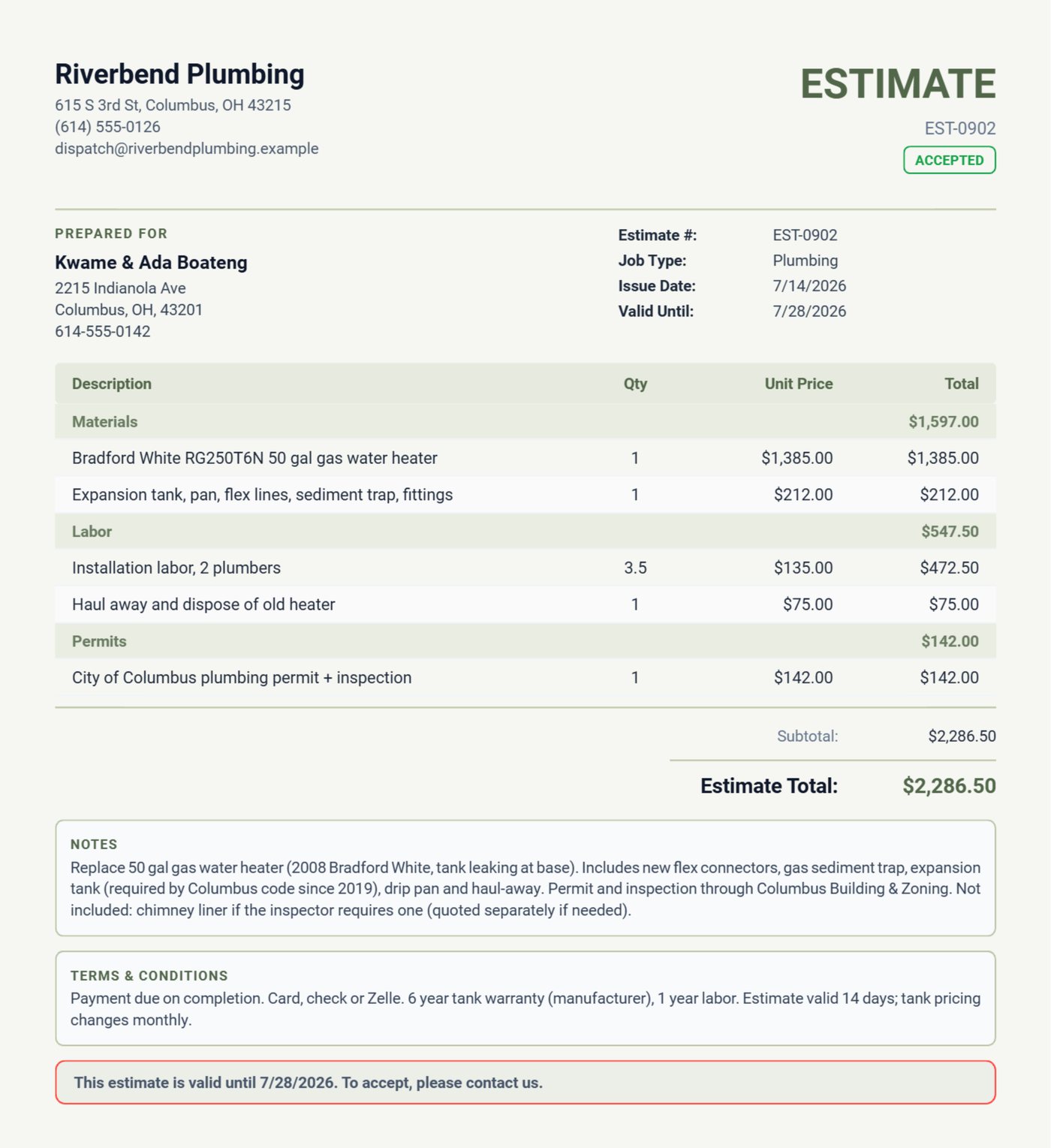
The heater was bought 7/15 and the customer paid 7/17, so the shop was out $1,580 for two days. That is fine for one job. With three heaters a week and a property manager on net 30, a plumbing company routinely has $8,000 to $12,000 of its own money out at any time. Two rules keep that survivable: for equipment jobs over about $1,500, take a deposit at acceptance (the example shop did not, and would have been exposed if the Boatengs had cancelled); and for property managers, invoice on the last day of every month by unit and work order number so the net-30 clock starts immediately. The example shop's May invoice to Scioto Property Partners, three units on one invoice with WO numbers, was paid on day 29.
Van inventory is cash
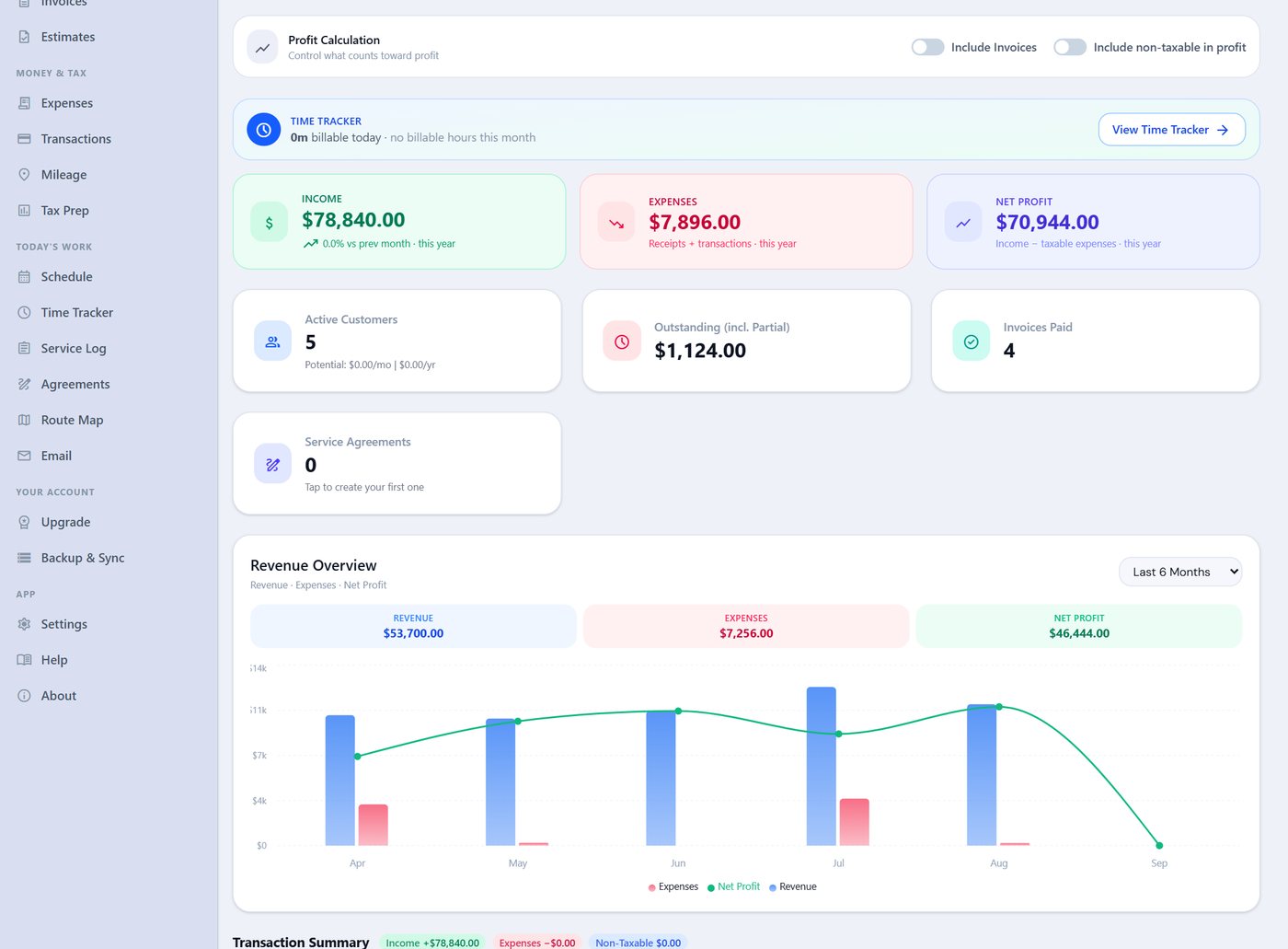
A stocked service van carries $6,000 to $10,000 of fittings, valves, cartridges and cable heads. Two vans is $15,000 that is not in the bank. Most of it turns over; some of it has been on the shelf since the van was bought. Twice a year, count it, price it, and stop reordering the items that have not moved in six months. For the tax return, inventory bought for resale is cost of goods sold when it is sold, not when it is bought, unless your preparer has you on the simplified method most small shops use; ask, because the difference changes the year's taxable income.
What the tax return needs
| Expense | Schedule C line | Note |
|---|---|---|
| Heaters, fixtures resold to customers | Cost of goods sold (Part III) | Tie the purchase to the job |
| Fittings and van stock | Line 22 or COGS | Consistent method year to year |
| Jetter, cable machine, camera | Line 13 or Section 179 | Equipment you keep |
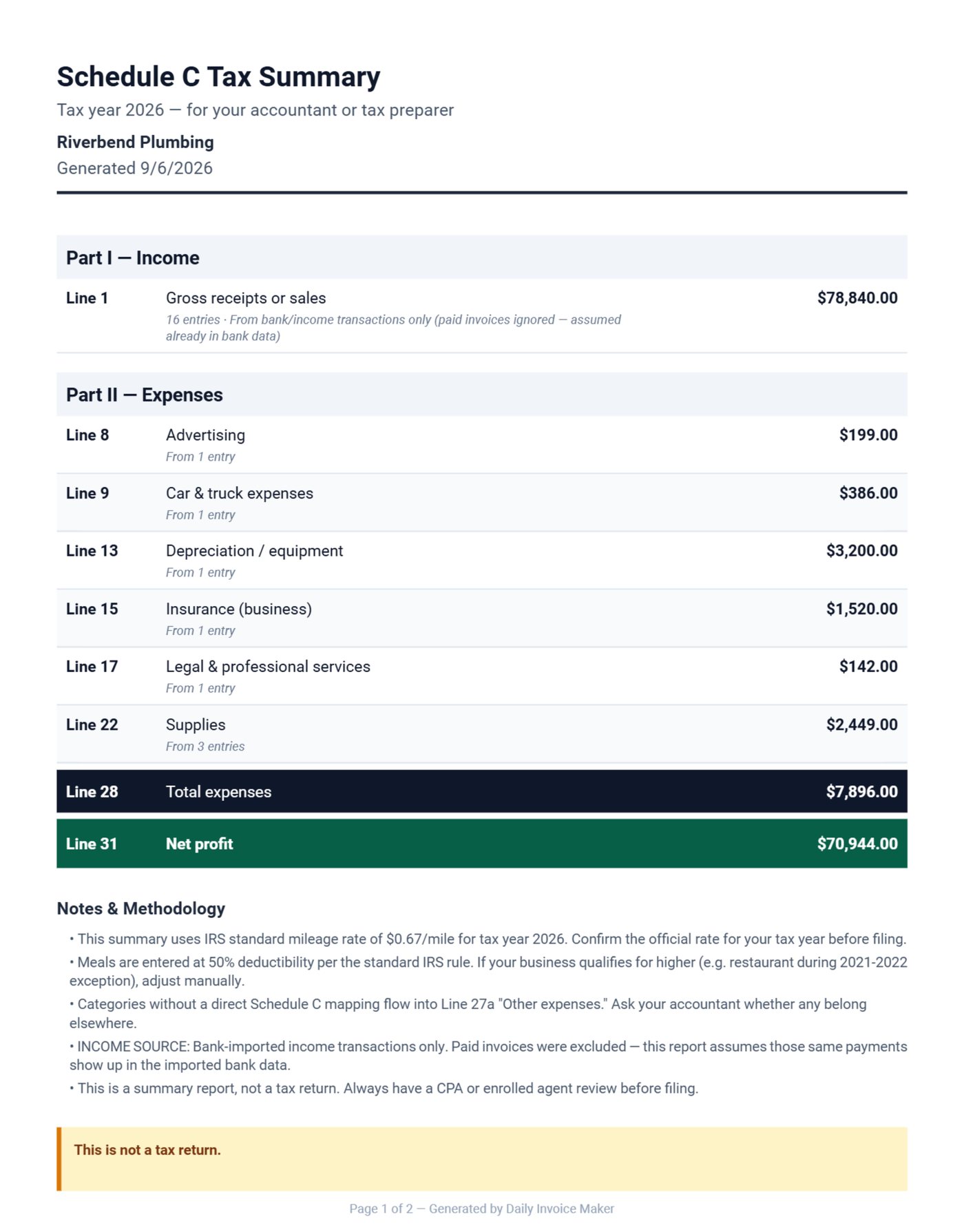
| Permits paid on customers' behalf | Line 17 or COGS | Pass-through; matches the invoice line |
| Two vans | Line 9 | Actual costs usually beat mileage for loaded vans |
| Liability, commercial auto | Line 15 | |
| Search ads for "emergency plumber" | Line 8 | Track cost per call; it is often the best marketing you buy |
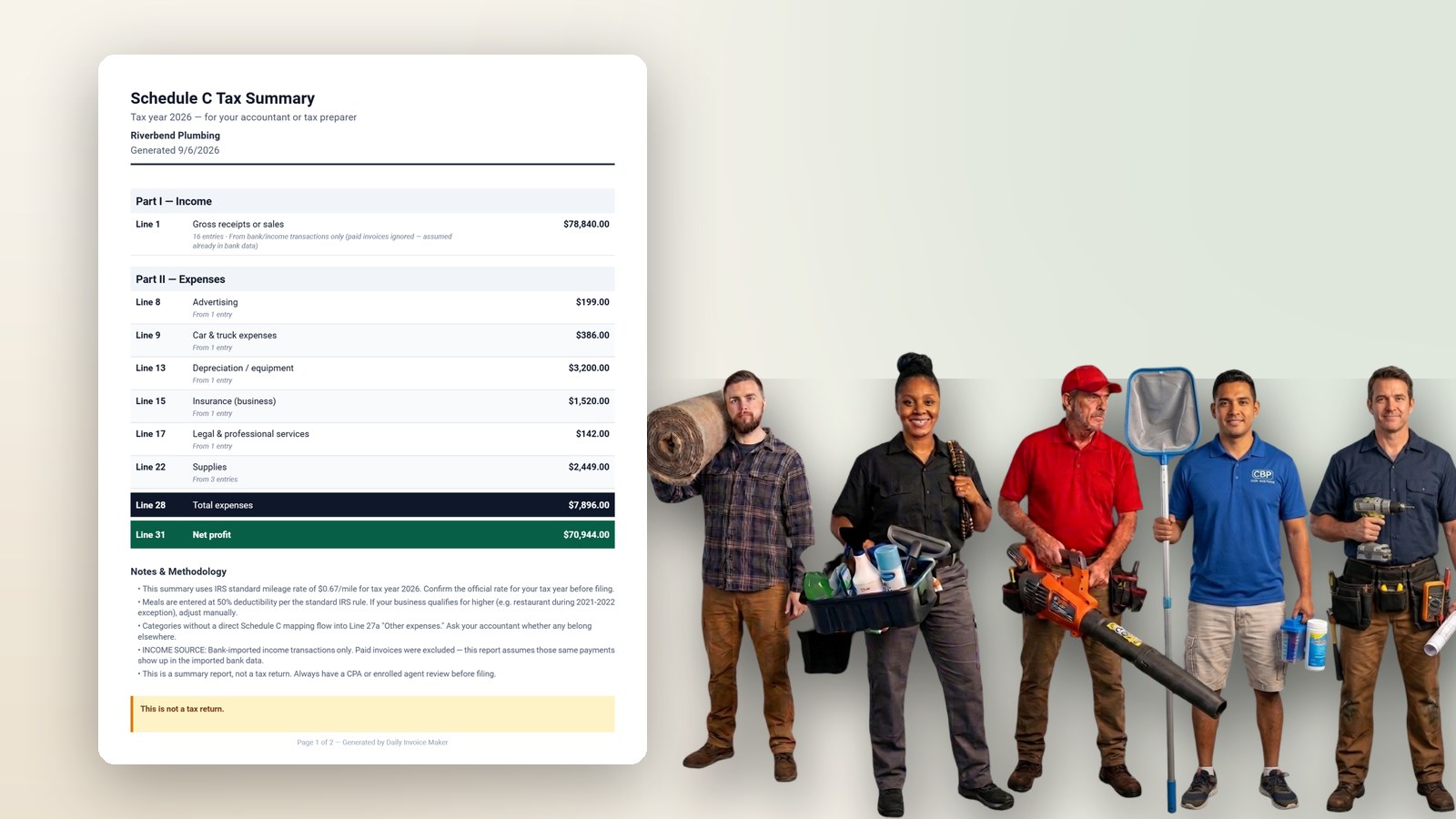
The app's Schedule C summary maps the year's categories to these lines and gives the preparer a page with numbers. The IRS Schedule C instructions cover Part III for a business that resells equipment.
Three plumbing-specific money habits
- Convert emergencies into maintenance. The bakery that called at 6 am is now on a $220 quarterly grease-line service. Four scheduled invoices a year beat one emergency.
- Re-price the rate card every January and reprint it in the terms. Supplier and insurance increases arrive whether you pass them on or not.
- Chase at 14 days, not 45. The example shop's overdue invoice is a $301 thermocouple job from July. Small plumbing invoices past 60 days are mostly written off.
FAQ
Should I charge a service call fee if I do the work?
Yes, and say so. The fee is the trip and the diagnosis; some shops credit it against work over a threshold, which is a fine policy as long as it is written down.
How much markup on a water heater?
20 to 30 percent on name-brand tanks is realistic; the customer can price them. Make the margin on the installation kit and the labor, and get the labor rate right.
Is plumbing labor taxable?
In most states, repair labor is not taxed and parts are; some states tax both under contractor rules. Keep them on separate lines so the sales tax return can be answered.
The bottom line
Price the emergency for what it costs you, pass permits through at cost, expire equipment quotes quickly, count the vans, and invoice property managers monthly by unit. Daily Invoice Maker, which produced the documents above, is a one-time purchase with a free demo at donlinestore.com; the sections, the rate card in the terms and the Schedule C summary are standard.
Comments (0)
Be the first to comment.
Leave a comment