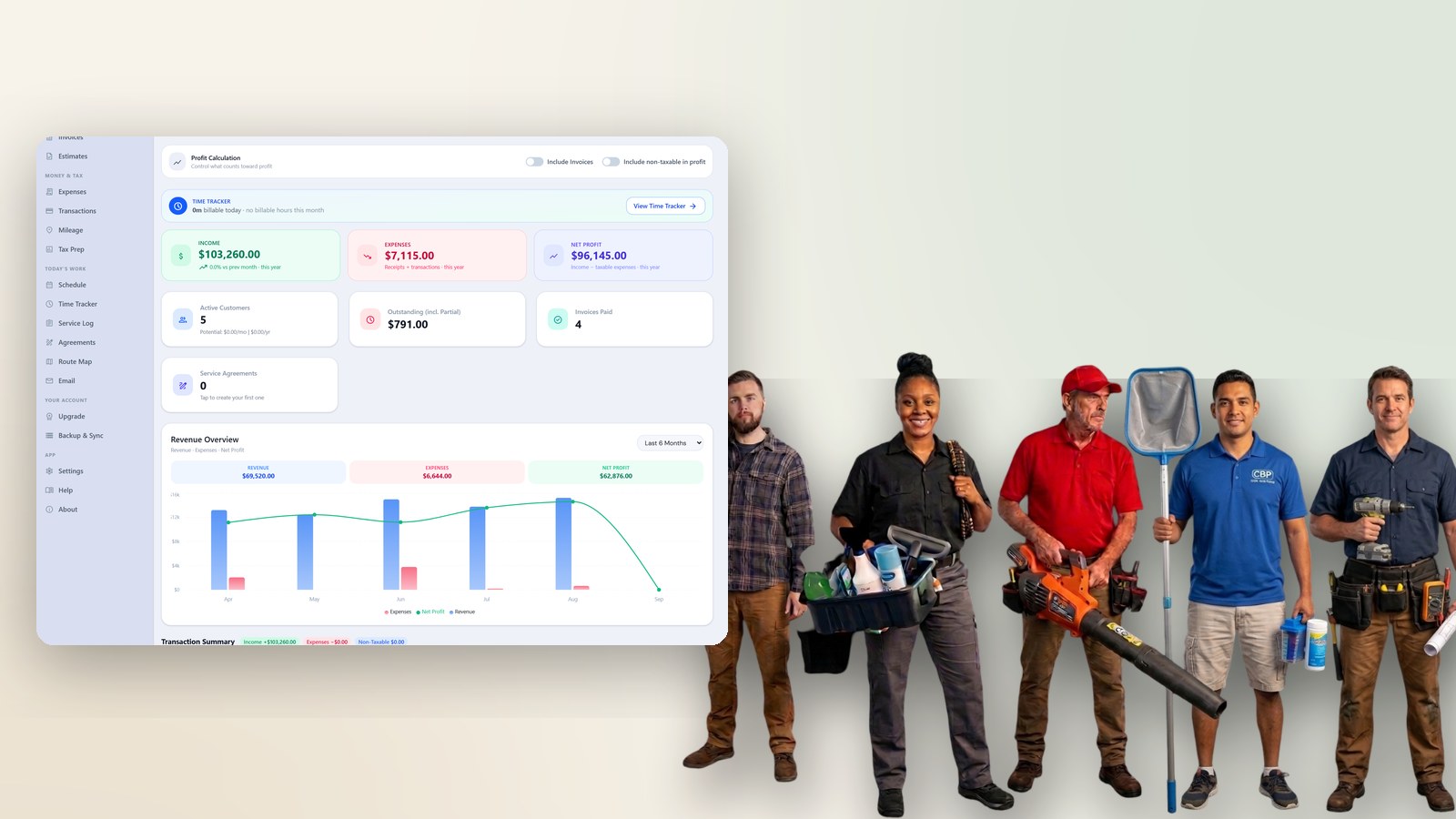
An independent repair shop lives on two numbers that most owners never see separately: the parts margin and the labor rate. Blend them into one invoice total and the shop can be busy every day and still not know why the rent is hard to make. This article is about the money side of a small shop: the margin math on a real job, how to set and defend a labor rate, why fleet accounts are worth a discount, the promise-to-pay problem, and what the tax return needs from a business with a bay lease. The example is Quick Fix Auto Repair in Mesa, Arizona, set up in Daily Invoice Maker, a desktop invoicing app from the publisher of this site; the documents shown are its real output.
Key takeaways
- Parts earn a markup (30 to 50 percent on aftermarket, less on OEM); labor earns a rate. Track them apart or you cannot see either.
- A labor rate has to cover the technician's loaded wage about three times over: the tech, the bay and the tools, the unbillable hours.
- Bay rent is the cost that decides whether a shop works. Know your rent per billable hour.
- Fleet accounts at a 10 percent lower rate on net 15 are usually more profitable than retail at full rate, because the bay is never empty.
- Parts bought for a job are cost of goods sold, not supplies; recorded that way, the tax return is right and the margin is visible.
The margin on one job
The retail job in the example is a 2016 Mustang GT with coolant in the oil: head gasket set, oil, coolant, 1.5 hours of diagnosis and 9 hours of replacement at $110.
| Line | Billed | Cost | Gross margin |
|---|---|---|---|
| Head gasket set, oil, coolant | $291 | $183 | $108 (37%) |
| Machine shop (head resurfacing) | included in labor | $180 | |
| Labor, 10.5 hours at $110 | $1,155 | $368 (tech at $35 loaded) | $787 |
| Ticket | $1,446 | $731 | $715 (49%) |
The labor margin looks enormous and it has to: $787 is what pays the bay rent, the lift, the scan tool subscription, insurance and the two hours a day the technician is waiting on parts. The parts margin is only $108 on a $1,446 ticket, and a $20 supplier increase on the gasket set that nobody noticed takes a fifth of it. The only way to notice is a parts line with its own price, which is what the estimate and invoice below have.

Setting the labor rate from the rent
Quick Fix pays $2,400 a month for two bays. One technician plus the owner produce about 260 billable hours a month if the shop is full, more realistically 210. That is $11.40 of rent per billable hour before anyone is paid. Add insurance ($460 a month, $2.20 an hour), utilities ($640, $3.05), tools and software ($400, $1.90), and the tech's loaded wage of $35 for the hours he is billing plus the hours he is not (about $48 per billable hour). The bay costs roughly $67 per billable hour before profit. At $110 the shop keeps $43 an hour, about $9,000 a month at 210 hours, which is the owner's pay and the reserve. At $95, the rate the shop down the street advertises, it keeps $28, and the owner earns less than the technician. Rates are set from the rent, not from the competitor's sign.
Why fleet accounts are worth the discount
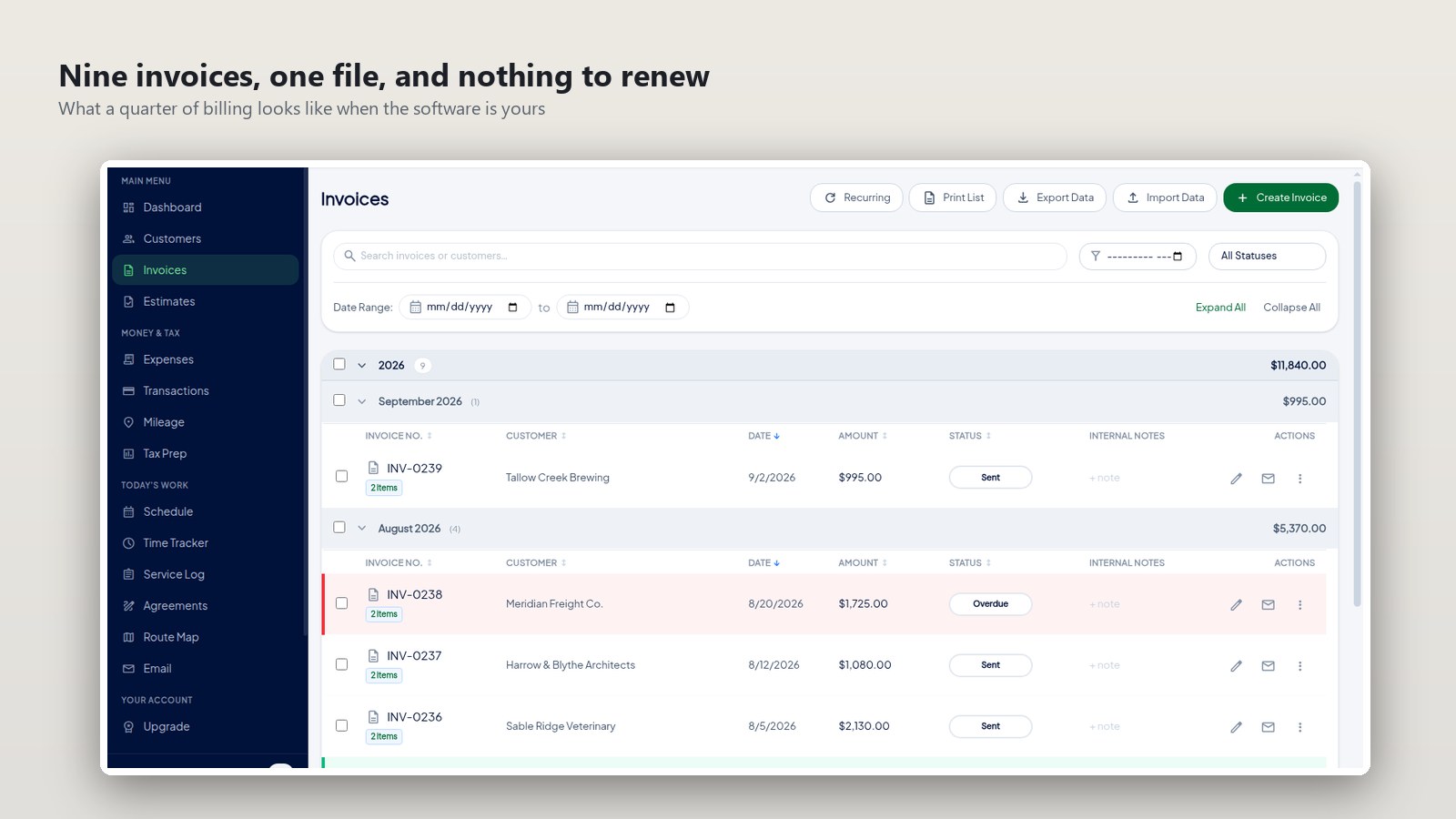
Sunbelt Courier's twelve vans get the fleet rate of $125 against a retail rate that would be $135 for the same work in this example, on net 15 terms. That sounds like giving away 7 percent. It is not, for three reasons: fleet work is scheduled, so the bay is full on Tuesday mornings that would otherwise be empty; the vehicles are identical, so the second brake job is faster than the first; and a fleet pays like clockwork on the 15th, which retail customers do not. The example shop's fleet income is about a third of its revenue and it arrives on a schedule. The paperwork that keeps the account is one invoice per van with the plate, VIN and van number on it, so the fleet manager's accounts payable can match it without a call.

The promise to pay
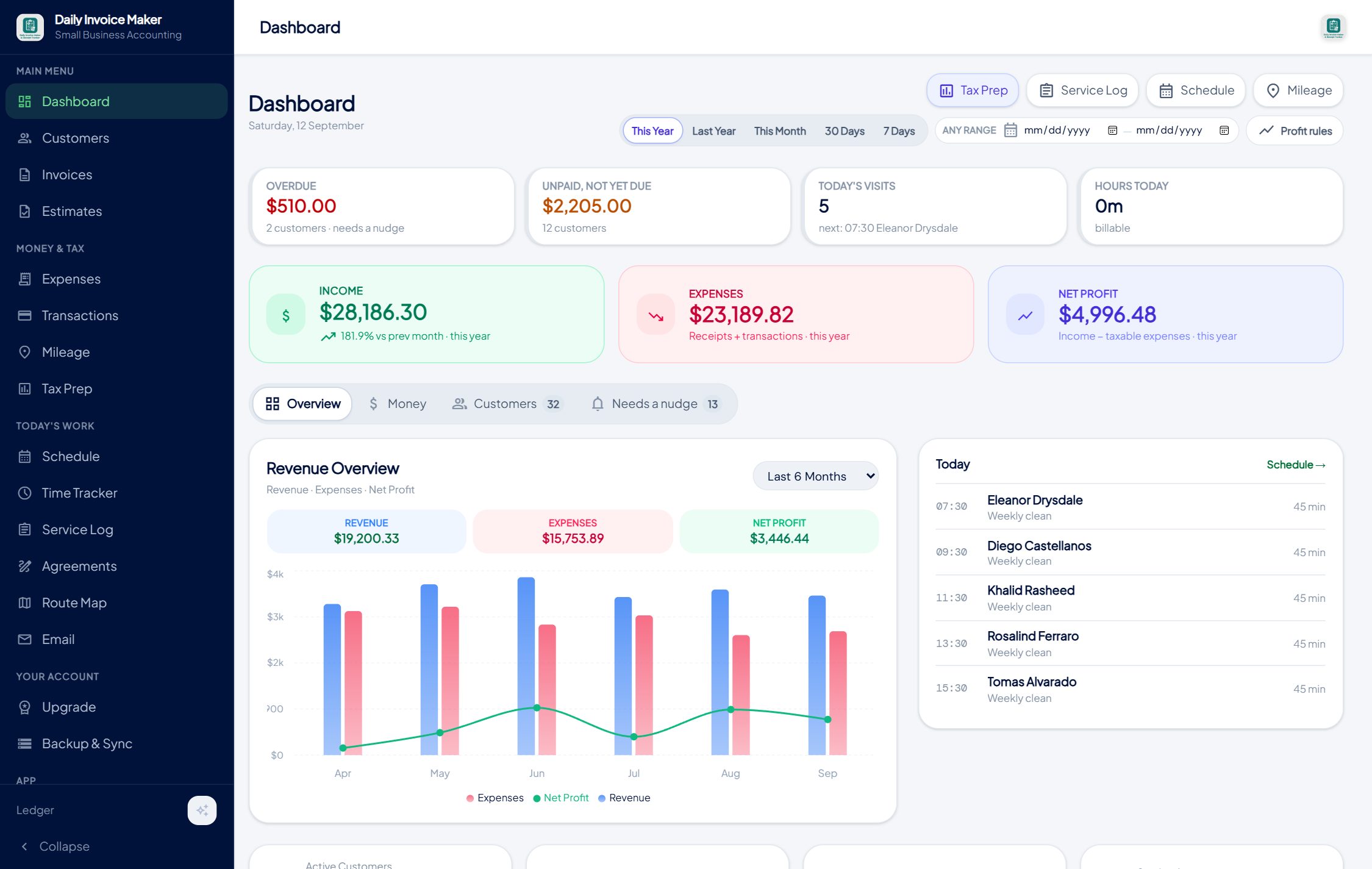
Every shop releases a car on a promise eventually. The Tacoma alternator in the example, $746, was released on 7/8 and is still unpaid in September. The math on promises is bad: a shop with $8,000 of net profit a month cannot absorb one $750 loss a month and stay at that number. The fixes, in order: payment due at pickup in the estimate terms, a signature at pickup on the same device that wrote the invoice, a reminder with the invoice attached at day 7 and day 14, and a mechanic's lien notice at day 30 where state law allows. Arizona's lien law lets a shop retain the vehicle until paid; once it is released, the leverage is gone. The dashboard's Outstanding figure is the number to look at every Friday.

What the tax return needs from a shop
| Expense | Schedule C line | Note |
|---|---|---|
| Parts bought for customer jobs | Cost of goods sold (Part III) | Tie each purchase to the repair order |
| Bay rent | Line 20b | The largest fixed cost; also the base for the labor rate |
| Garage keepers and liability insurance | Line 15 | |
| Scan tool updates, software | Line 27a or 22 | Subscriptions are expenses; the tool itself is depreciated |
| Lifts, compressors, smoke machine | Line 13 or Section 179 | |
| Machine shop, sublet work | Line 11 (contract labor) or COGS | Consistent treatment |
| Shop supplies (rags, cleaner, fluids not billed) | Line 22 | Separate from parts resold |
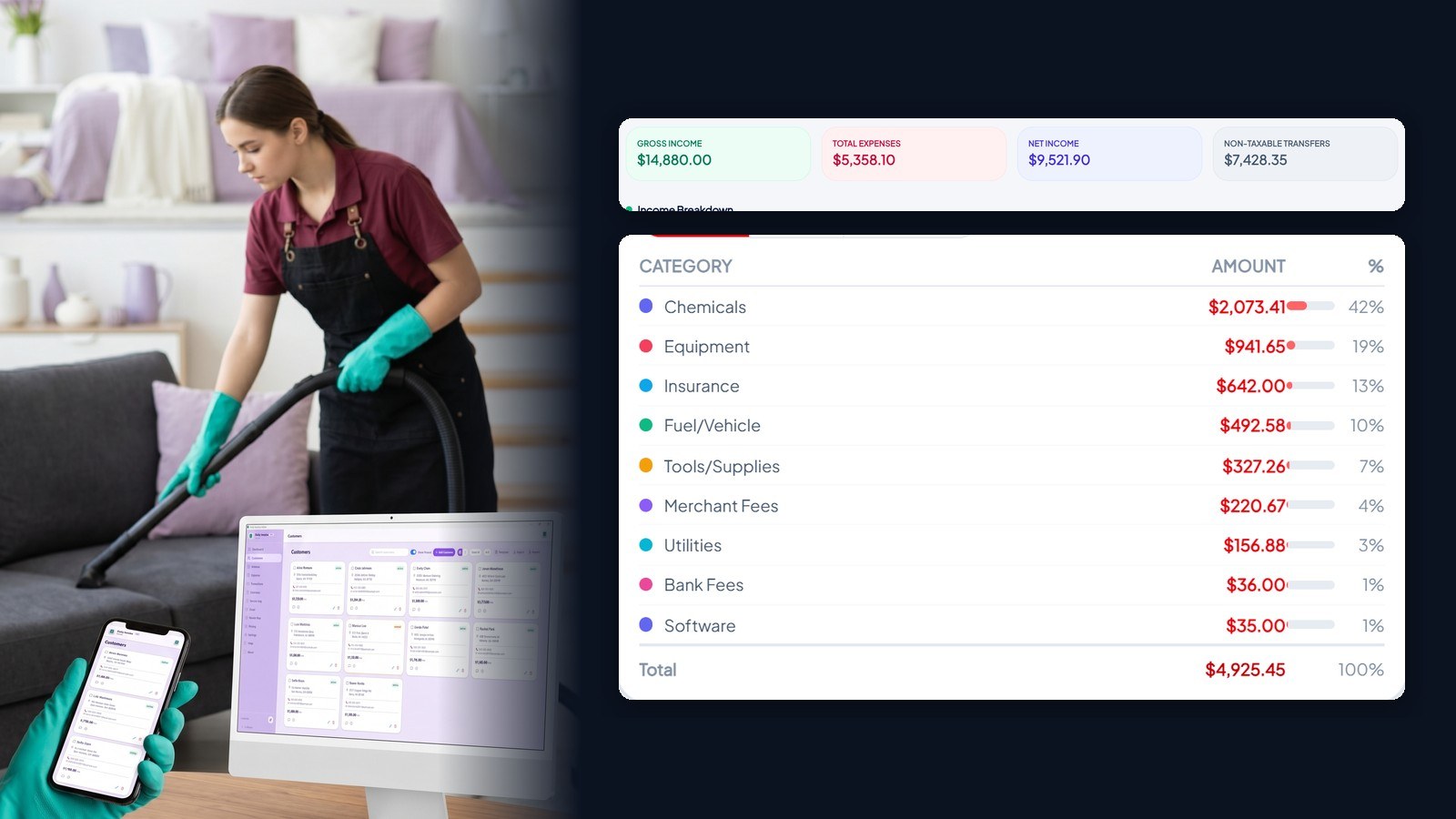
The point of recording parts per repair order is cost of goods sold: the IRS sees parts revenue on your invoices and expects the matching cost, and your margin report depends on the same match. The app's Schedule C summary maps the year's categories to these lines; the IRS Schedule C instructions cover Part III for a shop that resells parts.

Three numbers to know every month
- Billable hours. If the shop sold 190 hours and the techs were paid for 340, the labor rate is carrying 150 idle hours.
- Parts margin percent. Below 30 percent on aftermarket parts, someone is not passing on supplier increases.
- Outstanding over 30 days. In a shop this should be close to zero, because the car is the collateral until you release it.
FAQ
Should I charge a diagnostic fee?
Yes, at a higher rate than general labor if it uses the scope and your best technician, and credit it against the repair if the customer approves the work. The example shop bills diagnosis at the same rate but as its own line, so the hour is never free.
How do I handle sales tax on parts?
Most states tax parts and not labor. With parts and labor on separate lines, the taxable amount is obvious; blended, it is a guess. Keep collected tax out of your income figure.
Is a fleet discount ever a mistake?
When the fleet is one van. The discount pays for itself through scheduled volume; a single vehicle at a discount is just a lower rate.
The bottom line
Track parts margin and labor rate separately, set the rate from the rent, treat fleet work as the base of the business, and never release a car without payment terms in writing. Daily Invoice Maker, which produced the documents above, added a repair-shop estimate this year with the vehicle block and parts and labor tables; it is a one-time purchase with a free demo at donlinestore.com.
Comments (0)
Be the first to comment.
Leave a comment