Back in late 2022 I wrote a short post about Project79, a crypto project promising distributions from physical gold bullion bought with stablecoins users "sacrificed" through a portal. Looking at it now with a few more market cycles behind us, it is worth being honest about what the model was, what worked, and the safer way to actually get gold exposure in 2026.
Key takeaways
- "Sacrifice" is not investing. You are gifting tokens with no contractual right to a return — the project explicitly disclaims liability.
- Any crypto project that needs a euphemism for "buy" is telling you something about its legal posture.
- Real gold exposure in 2026 is boring and easy: GLD, IAU, physical bullion from a reputable dealer, or PAXG if you want an on-chain wrapper.
- Yield on gold should make you suspicious. Gold does not produce cash flow. Anyone promising monthly distributions backed by gold is taking risk somewhere you cannot see.
- Position sizing matters more than the vehicle. Most personal-finance research suggests 5–10% of a portfolio is the typical gold allocation ceiling.
What Project79 said it was
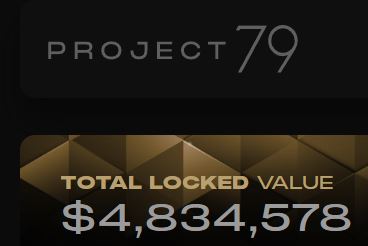
The pitch: Project79 had contracts with miners and refineries to buy physical gold at a discount to the LBMA rate, ship it via Brinks, and distribute the profits monthly as stablecoins to people who had "sacrificed" USDT or USDC during the funding window. The portal listed each user's wallet and projected distributions.
On its face, that is a tokenized gold-trading fund. The problem is the legal wrapper.
The "sacrifice" red flag
The site's own disclaimer was unusually candid:
There is no guarantee of profit and you should only sacrifice crypto you are willing to lose without the assumption of making a profit — you can lose all or part of your sacrifice amount.
Translation: you have no securities-law protection, no contractual right to distributions, and no recourse if the project disappears. The "sacrifice" framing is meant to dodge being classified as a security. That framing is famously associated with the Richard Heart / Hex / PulseChain orbit, which is a separate rabbit hole.
What actually happens with projects like this
Across the 2022–2024 cycle, the pattern for "tokenized commodity" projects with a sacrifice model was depressingly consistent:
- Big launch energy and a glossy portal.
- Real-time "distributions" page that looks impressive.
- Distributions that are smaller than promised, then late, then opaque.
- The team's marketing budget outlives the project.
I am not asserting fraud about any specific project here — only that the structure stacks the odds against the user. If the upside scenario plays out you get some stablecoin. If it does not, your only recourse is a Telegram channel.
What actually works for gold exposure in 2026
Boring ETFs
SPDR Gold Shares (GLD) and iShares Gold Trust (IAU) track the spot gold price with expense ratios in the 0.17–0.40% range. Liquid, regulated, held in your normal brokerage account. This is the default answer for most people.
Physical bullion
Coins and bars from APMEX, JM Bullion, or Costco (yes, Costco). Premiums over spot are 3–6% for common 1 oz coins. Storage and insurance are your problem. Best for buy-and-hold beyond a normal portfolio.
On-chain gold (PAXG)
PAX Gold (PAXG) is a token where each unit is backed 1:1 by an ounce of physical gold held in LBMA vaults by Paxos, a New York Trust-chartered issuer. It trades on major exchanges and is the most credible on-chain gold wrapper I am aware of. Custody risk is real (you trust Paxos), but the structure is audited.
Gold miners
GDX (large miners) and GDXJ (juniors) are higher-volatility, leveraged plays on the gold price. Not a substitute for gold itself — they trade more like equities.
How to evaluate any "backed by gold" crypto project
- Is there an issuer with regulated custody? Paxos, for example, publishes monthly attestations.
- Is the vault audited by a Big Four firm, with reports you can read?
- Can you redeem the token for physical metal, and what is the process?
- Does the marketing avoid the words "sacrifice," "guaranteed," or "passive income"?
- If something goes wrong, which court has jurisdiction?
If you cannot answer all five clearly, walk away.
My honest take
I posted the original Project79 article during the late-2022 stretch when half of crypto was still chasing yield. With the benefit of hindsight, the lesson is simple: if you want gold, buy gold. The crypto wrapper adds smart-contract risk, custody risk, and regulatory risk without adding upside that you cannot get from GLD or PAXG.
The regulatory reality behind "gold-backed crypto" pitches
Projects that promise a token "backed" by physical gold plus crypto-style upside deserve extra skepticism, because the claim and the proof are rarely the same thing. "Backed by gold" means little without an independent, recurring audit confirming the metal actually exists, is unencumbered, and matches the tokens in circulation. Many schemes marketed with guaranteed returns or "risk-free" gold exposure have been the subject of SEC and CFTC enforcement actions; regulators repeatedly warn that promised or guaranteed returns are a classic fraud signal.
Before sending any money, do three checks. Verify whether the offering and its promoters are registered using the SEC's search tools at Investor.gov, which also hosts fraud alerts and a checklist for spotting scams. Read the CFTC's guidance on precious-metals and digital-asset fraud at CFTC.gov. And insist on a named custodian and a real audit, not a marketing PDF. If a project cannot show independent proof of reserves, treat the "backing" as unverified. Action: search the promoter's name in the SEC and FINRA databases before investing a dollar.
FAQ
Is Project79 a scam?
I am not making a legal claim about any specific project. What I will say is that any structure that uses "sacrifice" framing to avoid being a security puts 100% of the legal risk on you and 0% on the team. That is a bad asymmetry regardless of intent.
What is the safest way to invest in gold in 2026?
For most people, a low-fee ETF like IAU or GLD in a normal brokerage account, sized at 5–10% of the portfolio. Add physical coins only if you specifically want bullion outside the financial system.
Is PAX Gold (PAXG) safe?
It is the most credible on-chain gold token, issued by Paxos, a regulated New York trust company, with regular attestations. You still take custody risk on the issuer and smart-contract risk on the chain. For long holds, regulated ETFs or physical metal are simpler.
Does gold pay interest or dividends?
No. Gold has zero yield by nature. Any project promising monthly distributions backed by gold is taking risk somewhere else — usually leverage, lending, or trading. Demand to see exactly where the yield comes from.
How much of my portfolio should be in gold?
Most retirement-planning research lands in the 5–10% range as a hedge against inflation and currency stress. Some all-weather portfolios go higher. Above 20% you are making a directional bet, not diversifying.


Comments (0)
Be the first to comment.
Leave a comment